
CPR Has No Gender: Why Women Are Less Likely to Receive Life-Saving CPR
When someone suffers a cardiac arrest, every second counts. Starting CPR immediately can double or even triple a person’s chance of survival until emergency services arrive.
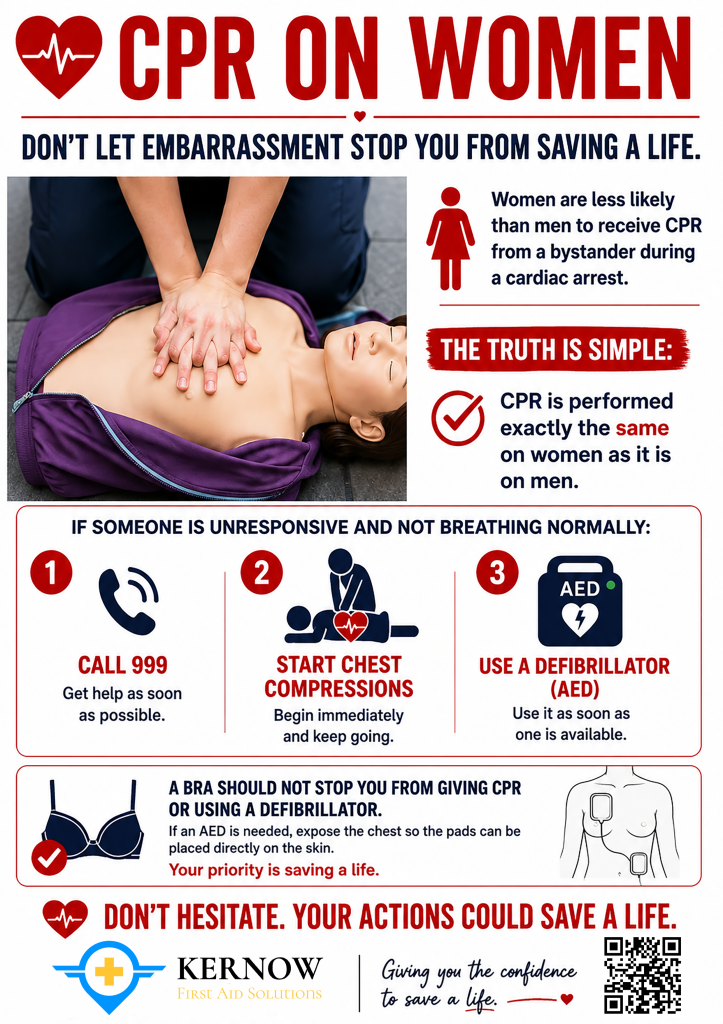
However, research has shown that women who experience a cardiac arrest in public are less likely than men to receive CPR from a bystander.
Why does this happen?
Many people worry about:
- Touching a woman’s chest.
- Causing embarrassment.
- Hurting the casualty.
- Doing something wrong.
These concerns are understandable, but they should never prevent someone from taking action when a life is at risk.
The truth is simple
CPR is performed exactly the same on women as it is on men.
If someone is unresponsive and not breathing normally:
- Call 999 immediately.
- Begin chest compressions straight away.
- Send someone to fetch the nearest defibrillator (AED), if one is available.
- Follow the AED’s voice prompts.
The most important thing is to act quickly.
What about clothing?
A bra should not stop you from giving CPR.
If a defibrillator is needed, the chest must be exposed so the adhesive pads can be placed directly onto the skin. This may mean moving or cutting clothing if necessary.
Remember, preserving someone’s dignity is important, but saving their life must always come first.
Don’t let hesitation cost a life
Cardiac arrest can happen to anyone, at any time.
Your mum.
Your daughter.
Your partner.
Your sister.
Your friend.
Your colleague.
If you witnessed someone collapse, would you know what to do?
The confidence to step forward and start CPR could make all the difference.
Learn CPR with confidence
At Kernow First Aid Solutions, we believe everyone should have the confidence to act in an emergency.
Our first aid courses include practical CPR training using feedback manikins, helping you build the skills and confidence needed to respond when every second counts.
Because when it comes to saving a life…
CPR has no gender.
Leave a Reply